What to Expect from Professional Interior Painting Services
Most homeowners have hired a painter at some point, but few have a clear picture of what a professional interior painting project actually looks like from start to finish. When you know what to expect at each stage, you can prepare your home properly, set realistic expectations for how long the project takes, and recognize quality work when you see it. You also know when something is being done wrong before it becomes a problem.
This post walks through the full process of a professional interior paint job, from the first consultation through the completion walkthrough and what comes after.
The Initial Consultation and Estimate
A professional interior painter does not quote over the phone or from a photo. They visit the space, walk through every room being painted, and assess conditions before putting a number on paper. A number given without a site visit is not an estimate. It is a guess.
During the walkthrough the painter evaluates wall conditions, identifies repairs needed, notes surfaces that require special preparation or priming, and confirms the scope of work. This assessment is what makes the estimate accurate.
The estimate that follows should be itemized. It should break down:
- Labor
- Paint product, brand, and quantity
- Number of coats per surface
- Any repairs included in the scope
- Project timeline with a start date and estimated completion
A vague single number with no breakdown is not a professional estimate. You should be able to see exactly what you are paying for and why.
Color selection expectations should also be clarified during the consultation. Ask whether the painter expects colors to be finalized before work begins or whether color consultation is part of their process. Showing up on the first day without colors selected is one of the most common sources of project delays, and it is entirely avoidable.
The consultation is also the right time to ask about crew size, what you need to do before the painters arrive, and how the painter handles unexpected repairs discovered once work begins.
How Long a Professional Interior Paint Job Takes
Project length depends on the number of rooms, the condition of the surfaces, the amount of prep work required, and the size of the crew. Knowing roughly what to expect before the project starts helps you plan around the disruption.
General timelines for common project scopes:
- A single room in good condition with minimal repairs typically takes one full day, often five to six hours for a standard bedroom or small living room
- Multi-room projects spanning three to five rooms generally take two to three days
- Whole-house interior projects may take five days or more depending on the number of rooms, trim complexity, repair scope, and number of colors
Dry time between coats is a factor most homeowners underestimate. Most interior paints require at least two to four hours between coats, and some require longer. A two-coat job in a room with slow-drying conditions cannot always be completed in a single day, and a professional contractor accounts for that in the timeline rather than rushing the second coat.
A professional contractor provides a clear timeline before work begins and communicates proactively if conditions change the schedule.
How a Professional Crew Prepares Your Home
Preparation is where the quality of a professional paint job is established. What happens before any paint goes on the wall determines how the finished job holds up and how it looks up close.
Protecting Furniture, Floors, and Fixtures
Before painting begins the crew prepares the space:
- Furniture is moved away from walls or to the center of the room. The homeowner is typically asked to remove small breakable items and personal belongings beforehand.
- Drop cloths are laid across all floor surfaces in the work area. Canvas drop cloths are standard on hard floors. Plastic sheeting is used for carpeted areas.
- Light fixtures, outlet covers, switch plates, and door hardware are masked or removed so paint is not applied to surfaces that should stay clean.
- Trim, baseboards, and ceiling lines are taped off precisely. The quality of the tape lines directly affects the sharpness of the finished edges.
Surface Preparation Before Any Paint Goes On
Walls are cleaned before any paint goes on to remove dust, grease, and surface contamination that would prevent proper adhesion. A painted surface is only as good as what is underneath it. Preparation is also one of the biggest factors in how long interior paint lasts once the project is complete.
Repairs are handled as part of prep:
- Holes, cracks, dents, and nail pops are filled with patching compound, allowed to cure fully, and sanded smooth. Properly done repairs disappear under paint. Repairs that are rushed or undersanded show through the finished coat.
- Areas being painted over a dramatically different color or on bare surfaces receive primer before topcoats are applied. Primer ensures consistent adhesion and even color development across the full surface.
- Caulking at trim joints, window frames, and wall transitions is inspected and replaced where it has cracked or separated. Unpainted caulk gaps become visible lines after painting and are a sign of incomplete preparation.
What Happens During the Painting Itself
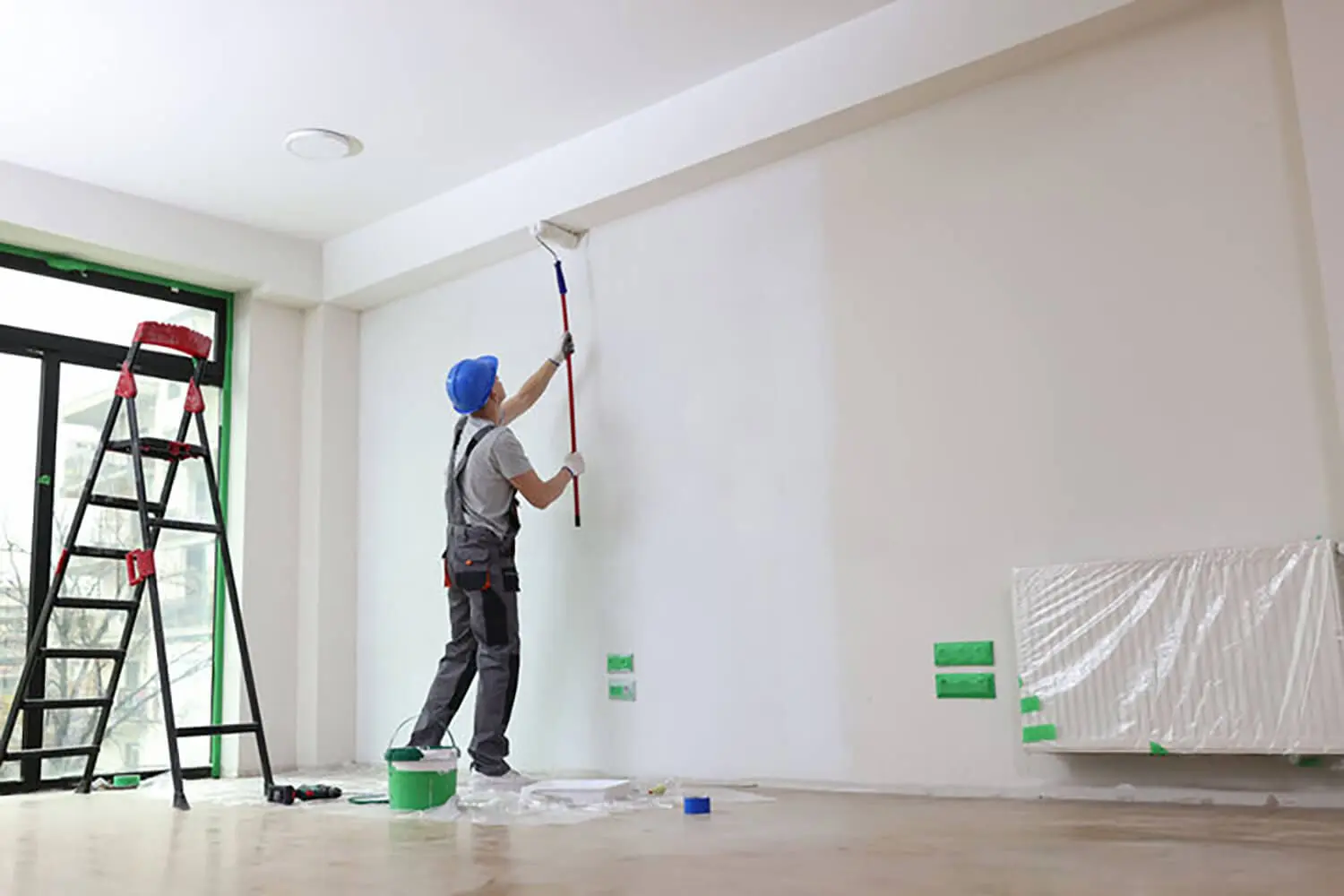
Professional painters work in a defined sequence. Trim and edges are cut in first using a brush, then walls are rolled, then a second cut-in pass is made where needed to clean up any lines before the paint dries. Working in this order produces cleaner transitions than rolling first and cutting in second.
Paint is applied in a minimum of two coats. One coat is rarely sufficient for even coverage, accurate color, or long-term durability regardless of the quality of the product. Each coat is allowed to dry fully before the next is applied. Rushing the second coat traps moisture between layers, which produces a finish that feels soft, picks up marks easily, and fails earlier than it should.
The crew works room by room or section by section in a defined sequence that minimizes disruption to the household and keeps wet surfaces away from traffic areas. At the end of each work day the homeowner should be able to move safely through the home, with tools stored, drop cloths repositioned, and wet surfaces clearly identifiable so nothing gets accidentally touched overnight.
What a Finished Professional Paint Job Should Look Like
Knowing what a quality result looks like helps you evaluate the work before you sign off on it. A professionally finished interior paint job should show:
- Even, consistent coverage across every surface with no thin spots, roller marks, or areas where the underlying color shows through
- Clean, sharp lines at every transition, where walls meet ceilings, where trim meets walls, and where different colors meet each other
- No visible drips, runs, brush marks, or debris embedded in the dried surface
- Repaired areas that are completely invisible under the finished coat. Patches that show through as raised or textured spots are a sign of incomplete sanding.
- Consistent sheen across each surface. Sheen variation in the same color on the same wall indicates uneven application or inconsistent product use.
These details are visible up close. A professional result looks as precise from two feet away as it does from across the room.
The Completion Walkthrough
A completion walkthrough with the homeowner is a standard part of a professionally run interior painting project. It is not optional and it is not a favor. It is the handoff.
During the walkthrough the painter reviews every painted surface with you, section by section. Any areas that do not meet the agreed standard are identified and addressed before the job is closed out. Touch-ups found during the walkthrough are completed before final payment is made. A contractor who pushes back on reasonable touch-up requests during the walkthrough is telling you something important about how they operate.
Before the crew leaves you should receive documentation of every product used on the project:
- Paint brand and product line
- Color name and code for every color used
- Sheen level for each surface
This information is essential when you need touch-up paint down the road. Paint matched without accurate product information rarely looks right on a finished wall, and repainting an area because the touch-up does not match is an avoidable cost.
How to Care for Freshly Painted Walls
Paint may feel dry to the touch within a few hours of application but full cure takes two to four weeks depending on the product, the sheen, and the conditions in the room. During that curing period the surface is more vulnerable than it will be once fully hardened.
A few things to keep in mind after the job is complete:
- Avoid washing or scrubbing freshly painted walls for at least two to four weeks. Cleaning before the paint has cured can lift the finish or leave marks that cannot be buffed out.
- Small scuffs and marks that appear in the first few weeks should be addressed with a very light touch. Pressing too hard on a wall that has not fully cured can permanently mark the surface.
- A professional painter provides guidance at the completion walkthrough on how long to wait before cleaning, what cleaning methods are appropriate for the finish applied, and how to store leftover touch-up paint so it remains usable when you need it.
What Professional Interior Painting Should Feel Like from Start to Finish
A professional interior painting project is organized, communicative, and leaves your home cleaner than it was found. Every stage from the initial consultation through the completion walkthrough should feel like working with someone who knows what they are doing and takes pride in the result.
A project that feels chaotic, produces poor communication, or leaves a mess is not meeting professional standards regardless of how the walls look when the crew walks out the door.
Urban Painting Company follows this process on every interior painting project in Salt Lake City. If you are ready to get started, contact us today to schedule an estimate and we will walk you through exactly what to expect for your specific project.