What to Expect from Commercial Painting Services in Salt Lake City

Most business owners and property managers have hired contractors before. But commercial painting tends to surprise people who have only dealt with residential work. The scope is larger, the process is more involved, and the stakes are higher when the space affects how clients, tenants, and employees experience your business every day.
Understanding what professional commercial painting actually involves before you hire someone puts you in a much better position to choose the right contractor and get results that hold up. This post walks through the full process from assessment to completion, and what to look for when evaluating contractors in Salt Lake City.
How Commercial Painting Differs from Residential Work
The most important thing to understand about commercial painting is that it is not residential painting at a larger scale. The two disciplines have different requirements, different products, and different standards.
Commercial projects involve a wider range of substrates. Where a residential painter primarily works with drywall, commercial work regularly involves concrete, masonry, metal, wood, and composite surfaces, each with its own preparation requirements and coating specifications. Applying the wrong product to the wrong substrate is one of the most common causes of early paint failure on commercial projects.
The coatings themselves are also different. High-traffic corridors, restrooms, kitchens, warehouses, and exterior facades all have specific performance demands that standard interior wall paint cannot meet. Commercial painters work with industrial-grade epoxies, elastomeric coatings, anti-microbial finishes, and other specialty products selected for the environment they will live in.
There are also compliance considerations that simply do not exist in residential work. Depending on the project, a commercial paint job may need to account for VOC limits in occupied spaces, fire-rated coatings in certain areas, or finish specifications required by a landlord or property management company.
And the stakes are different. When a residential paint job has a flaw, the homeowner sees it. When a commercial paint job has a flaw, your clients, customers, and employees see it every day.
What to Look for When Hiring a Commercial Painting Contractor in Salt Lake City
Knowing what a qualified contractor looks like before you start taking bids protects you from making a decision based on price alone. A rushed quote, vague answers about surface preparation, or no defined project timeline are warning signs regardless of what a contractor charges.
Licensing, Insurance, and Experience
Before anything else, verify that the contractor carries general liability insurance and workers’ compensation coverage. Ask for certificates of insurance before work begins, not after. A contractor who hesitates on this is not someone you want on your property.
Beyond coverage, look for contractors with specific commercial experience. Residential painting experience does not transfer cleanly to commercial work. The substrates, the products, the scheduling demands, and the compliance requirements are different enough that a contractor without commercial experience is learning on your project.
Ask for references from comparable commercial projects in Salt Lake City or the surrounding area. A contractor with a strong track record on commercial work will have no trouble providing them.
How They Handle Scheduling and Communication
A professional contractor presents a clear project timeline before work begins. That timeline should identify when work starts, how the project is phased if the space needs to stay operational, and when substantial completion is expected.
Equally important is how they communicate once work is underway. Ask who your point of contact will be during the project. You should have a specific person to call when you have questions or when something unexpected comes up, not just a crew that shows up in the morning.
What Their Prep Process Looks Like
Ask every contractor you speak with to walk you through what surface preparation involves on your specific project. The answer tells you a lot.
A qualified contractor gives a detailed, specific response that reflects an actual assessment of your surfaces. They talk about what needs to be cleaned, what needs to be repaired, what needs to be primed, and why. A vague answer like “we’ll take care of it” or a contractor who minimizes the prep discussion is a contractor who is either guessing at scope or planning to skip steps.
Professional contractors inspect surfaces before finalizing a quote. If a contractor is giving you a number without having looked at your walls, floors, and ceilings up close, they are not accounting for what is actually there.
What Happens During the Assessment and Planning Phase
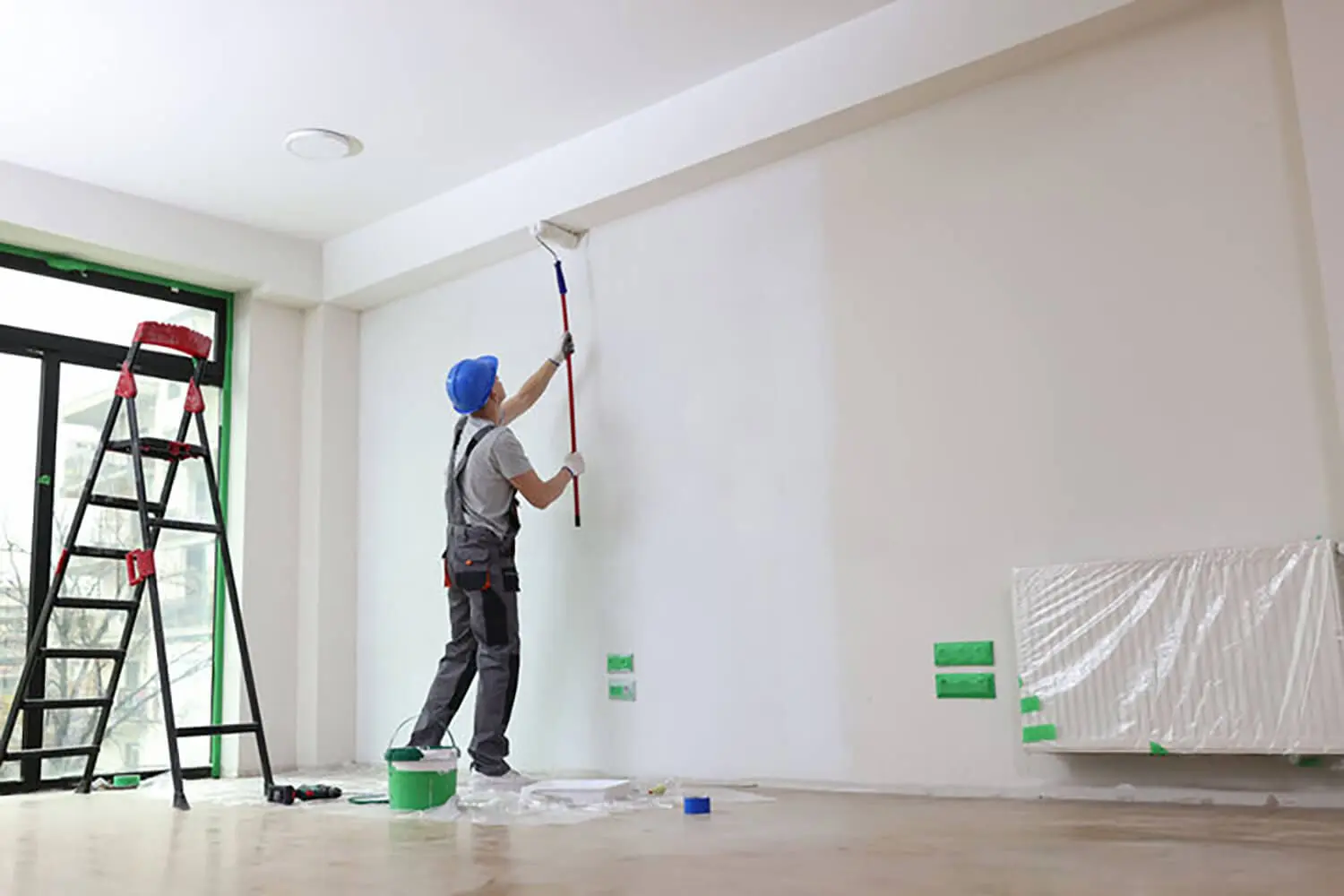
A commercial painting project does not begin when the crew arrives with rollers. It begins with a walkthrough.
During the assessment, the contractor evaluates surface conditions across the entire project area. That includes testing existing coating adhesion, identifying areas where the current paint is failing or peeling, noting any substrate damage that needs repair, and flagging environmental factors like moisture, humidity, or ventilation that could affect how the new coating performs.
From that assessment comes a written scope of work. The scope defines what surfaces are being painted, what products will be used on each surface, what preparation is required, and what the project timeline looks like from start to finish. A contractor who cannot produce a clear scope of work is not ready to run your project.
Color selection and approval also happens during planning. This matters more than it might seem. Changes made after painting begins require stopping work, potentially reordering materials, and repainting completed areas. Professional contractors lock in color and finish approvals before a single coat goes on the wall because changes mid-project cost time and money that could have been avoided.
Why Surface Preparation Takes Longer on Commercial Projects
If you ask a professional commercial painter what separates a paint job that lasts from one that fails early, the answer is almost always preparation.
Commercial surfaces carry more contamination than residential ones. Years of foot traffic, cooking grease, industrial residue, cleaning chemicals, and general wear leave behind a layer of buildup that has to be fully removed before new coatings will adhere properly. Paint applied over contaminated surfaces may look fine initially and start failing within months.
Existing coatings that are failing present their own challenge. A professional contractor does not paint over peeling, bubbling, or delaminating paint. They remove it. Painting over a failing surface does not fix the problem; it transfers the failure to the new coat and shortens its lifespan by the same factors that caused the original failure.
Repairs to damaged substrates also add time. Cracks in drywall or plaster, spalled concrete, corroded metal, and deteriorated caulk all need to be addressed before topcoats go on. Repair materials need adequate cure time before they can be painted, and rushing that process produces a visible result.
The scale of commercial spaces amplifies all of this. A preparation mistake on a residential bedroom affects one room. The same mistake across a commercial corridor, lobby, or warehouse affects hundreds or thousands of square feet.
How Professional Commercial Painters Work Around Your Business
One of the most practical questions a business owner can ask a commercial painting contractor is how they plan to keep the business running while the work happens. A professional contractor has a real answer to this question.
Phased scheduling is the most common approach. Rather than shutting down an entire facility, the contractor divides the project into sections and works through them in sequence. Completed sections are returned to normal use while work continues in others. For businesses that cannot close, this approach keeps operations running throughout the project.
Off-hours work is another option, particularly for spaces that cannot accommodate any disruption during business hours. Retail environments, restaurants, medical offices, and occupied office buildings often require evening or weekend scheduling. A qualified contractor factors this into their timeline and pricing upfront.
Containment is handled through:
- Masking and drop cloths protecting furniture, flooring, and equipment
- Plastic sheeting isolating work areas from occupied spaces
- Proper ventilation setup to manage fumes and airborne particles
Air quality management in occupied spaces requires deliberate product selection and ventilation planning. Professional contractors account for how paint fumes and odor will affect staff and customers during application and in the days following. This is a planning decision, not an afterthought.
Throughout the project, communication should be consistent. You should know what is happening each day, when phases are changing, and who to contact if something comes up.
What a Completed Commercial Paint Job Should Deliver
When a professional commercial painting contractor finishes a project, the result should be immediately evident in the quality of the work and in how the handoff is handled.
Visually, the finished surfaces should show consistent, even coverage with no roller marks, lap lines, or areas where the underlying surface shows through. At transitions, where walls meet ceilings, trim meets walls, and floors meet baseboards, the lines should be clean and sharp. These details are where the difference between professional work and rushed work is most visible.
In high-traffic areas, the coating should be appropriate for the wear that space actually sees. A semi-gloss or gloss finish in a corridor handles cleaning and contact far better than a flat finish, and a professional contractor makes those recommendations based on how the space is used, not on what is easiest to apply.
The completion walkthrough is a standard part of any professional commercial job. Before the contractor closes out the project, they walk the space with the property manager or business owner, review the finished work section by section, and address any touch-ups before they leave. This is not optional on a professionally run project.
Finally, a professional contractor provides documentation of every product used on the project, including brand, product line, color codes, and sheen levels. This information matters when touch-ups are needed down the road. Paint matched without accurate product information rarely looks right on a finished wall, and repainting an area sooner than necessary because the touch-up does not match is an avoidable cost.
What Salt Lake City Business Owners Should Know Before Hiring
The quality of a commercial paint job is largely determined before a single coat goes on the wall. The contractor you choose, the preparation process they follow, and the planning that happens upfront set the ceiling on what the finished project can be.
A well-run commercial painting project in Salt Lake City starts with a thorough assessment, produces a clear scope of work, follows a defined preparation process, and finishes with a walkthrough and complete product documentation. Those are not extras. They are the baseline for professional work.
If you are planning a commercial painting project and want to understand exactly what your space needs, we are here to help. Contact Urban Painting Company to schedule a walkthrough and get a straightforward quote on your project.